


You've already painted several rooms in your house, but you have some questions about painting the bathroom: which paint should you choose? Indeed, the bathroom is not a room like any other, and for good reason: the presence of humidity requires choosing a suitable type of paint that can be applied correctly in a humid room like the kitchen or bathroom, and above all to guarantee good application and resistance over time.
If you are on this page, it is because you are asking yourself this question, and we are therefore going to provide you with the elements necessary to answer it.
In our opinion, three criteria are important when choosing the perfect type of paint for your bathroom renovations. The first of these is, of course, the characteristics of the room, which will determine the choice of paint to apply to the walls and tiles of your bathroom. The choice of color is also important, although this has more to do with aesthetics for your wall than with technical aspects.
Finally, whatever type of paint you use, it will not give a good result without good preparation of the surface.
What are the criteria for choosing a good bathroom paint?
Use natural paint when possible
While the application procedures for painting your bathroom may seem similar to those for other rooms in the house, it is true that the paint you use for your work may be different from that of more conventional rooms such as the living room or master bedroom, for example.
The most important criterion for a wet room is the humidity (and this also applies to the kitchen). While it's recommended to paint in optimal conditions with as little humidity as possible, wet rooms remain the most humid spaces in your home. Choosing the right paint for bathroom renovations is of paramount importance, whether acrylic or eco-friendly.
Depending on the surface, the type of paint you use will vary. For example, to paint a wall, a more conventional paint may be used, but this will not be the case if you want to repaint the tiles in your room , where a special paint will be required initially.
Glycero and acrylic paints are still too often used to paint bathrooms. These paints are indeed effective for painting the walls and ceiling of your bathroom, with good hold and significant resistance to humidity. It is important to know, however, that glycero paints will emit a strong odor and will take a little longer to dry than other paints. While acrylic paint has no drawbacks, these two types of products have one thing in common: their potential for harm.
Glycero and acrylic paints are largely composed of synthetic elements that can have an impact on the health of the inhabitants due to the recovery of raw materials that are not necessarily natural. For painting your bathroom, we recommend using an ecological paint based on a bio-sourced resin (on the condition of course that it can be applied in humid environments). The paints we offer are multi-surface and are therefore suitable for bathrooms. You will therefore be able to apply Algo paints without any problem to paint the walls and ceiling of your bathroom, which will be healthier than with acrylic paint.
A little extra, its price per liter will not necessarily be higher depending on the brand.
satin or matte: which finish should you choose?
We have already mentioned this in several guides on this subject: there are several finishes, the most popular of which are matte, satin and velvet.
It is customary to use matte on the ceiling of conventional rooms, which would be prohibited in a bathroom. While the velvet finish is a good compromise, again, we would not necessarily recommend it in a bathroom due to its slightly less resistance and its lower washability than a satin finish.
As you can see, satin is the ideal finish for painting or repainting the walls and ceiling of your bathroom. It is the most washable finish available, but above all, it will be the most suitable in terms of resistance and durability for the surfaces of your bathroom, whether it is wood, tiles, or the walls of your bathrooms.
What colors are compatible for decorating a bathroom?
The question of decor for a bathroom renovation is also central. Our color chart, for example, is composed of 100 shades that can be applied to your room. Of course, while everyone's tastes vary, we favor certain shades for bathrooms.
For us , the choice of color is determined by several criteria beyond the appearance of the decor. The room's exposure, its brightness, and its size are essential when choosing color. Often, the bathroom is not the brightest room in a home, nor is it the largest. For this reason, we encourage you to initially use soft, neutral, and especially light shades so as not to saturate the visual space of the bathroom and create a feeling of enlargement.
For practical reasons, but also because it meets all the criteria previously mentioned, white is of course the star shade for a bathroom. It can be combined with many other colors to bring a more decorative dimension to your bathroom or with a total look.
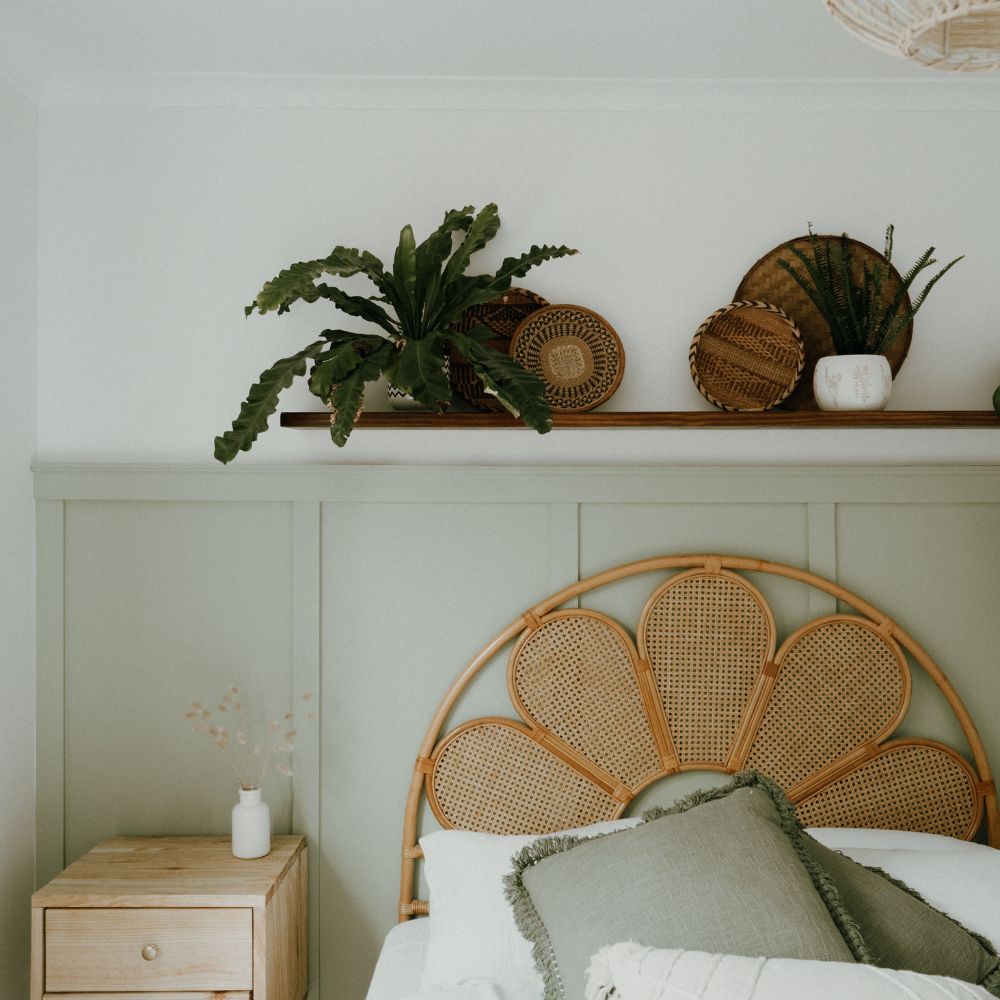
Many other pastel shades can be used in a bathroom. We're thinking in particular of sea green, which is very trendy right now and is particularly suitable for use in a bathroom.
If you have any doubts about your choice of colors, please note that we can help you with our free color advice: practical, isn't it?
Preparing your bathroom is essential!
You can choose the best possible satin paint for your bathroom renovations, but if the surface preparation is not carried out correctly, you may not get the desired result.
The first step is to clean all surfaces using a microfiber cloth and a mild soapy water solution. This will remove any dirt, grease stains, and potential mold. Once the cleaning is complete, you can inspect all walls for any imperfections, such as holes or cracks. In this case, don't hesitate to coat the surface to ensure your walls are in excellent condition.
How much does bathroom paint cost?
The more specific the satin paint, the more likely it is to cost more than a traditional paint. As for Algo paints, they are multi-surface and therefore suitable for use in a bathroom. The price of our satin products does not vary since we have a single range of satin paint for interiors. The price per liter depends on the packaging you choose (ranging from 0.5 liters to 5 liters for shades and up to 10 liters for white and the undercoat).
Our paints are available for sale with over 100 shades in stock on our website and over 1000 verified reviews!